

After a storm passes through Blythewood, the first concern for any homeowner is safety. Once you know your family is okay, the next worry that sets in is almost always the same: What damage has my home sustained, and what will it cost to fix? As a Senior Field Services Specialist with over a decade of experience in the field, I understand that uncertainty. The cost of a professional assessment is a top concern, and my goal here is to provide some transparent information to help you budget and plan effectively.
Especially during the peak of hurricane season, our hot and humid August weather can turn a small, hidden leak into a major problem with mold and rot in a matter of weeks. A thorough storm damage inspection isn't just about spotting a few missing shingles; it's about protecting your home's long-term structural integrity. Let's break down what you can expect in terms of cost and what's included.
Average Costs in Blythewood
When you're looking for a post storm inspection Blythewood SC, you'll find that costs can vary. It’s important to understand what you're paying for. Generally, inspections fall into a few tiers.
- Initial Visual Assessment: $300 - $600. This is the most common starting point. A trained technician will conduct a comprehensive visual inspection of your home's exterior envelope. This includes walking the roof (if safe to do so), checking siding and brickwork for impact marks from hail or wind-blown debris, inspecting windows and doors for seal damage, and assessing gutters and downspouts. This level of inspection is designed to identify obvious storm-related damage and is often sufficient for minor to moderate storms.
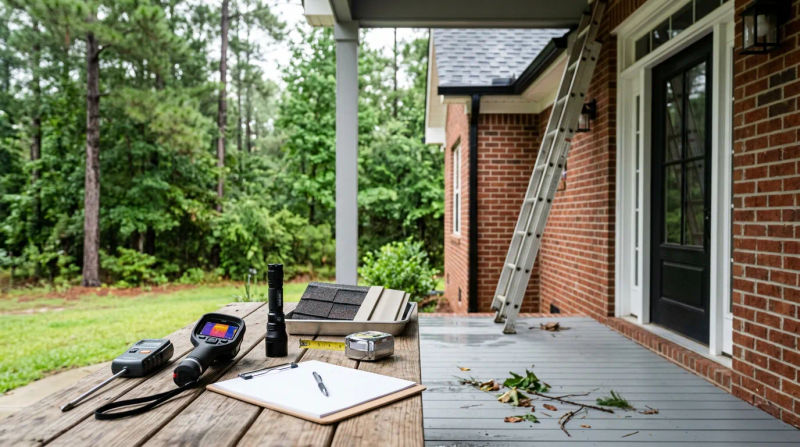
- Detailed Diagnostic Inspection: $700 - $1,500+. If significant damage is suspected or if your home has unique architectural features, a more in-depth assessment may be necessary. This is particularly true for many of the beautiful, pre-1940s custom homes in our area. Their complex, steep rooflines and classic revival materials require a more careful and time-consuming approach. This advanced inspection may involve using tools like thermal imaging cameras to detect hidden moisture behind walls or ceilings and moisture meters to quantify saturation levels in building materials. In some cases, our technicians may need to perform minor, controlled removal of materials to confirm the source and extent of a leak.
It’s worth noting that many professional contractors will credit the cost of the inspection toward the total repair bill if you choose to hire them for the subsequent work. This effectively makes the detailed assessment a part of the repair process itself.
Factors That Affect Price
The price ranges above are a good starting point, but several factors can influence the final cost of your inspection. Our organized workflows are designed to be efficient, but these variables naturally affect the time and resources required.
- Home Size and Complexity: A single-story, 2,000-square-foot home with a simple gable roof is much faster to inspect than a three-story, 5,000-square-foot home with multiple dormers, valleys, and steep pitches. The historic brick and stucco homes built in the 1920s and 30s often fall into this more complex category, requiring extra safety precautions and more time to inspect thoroughly.
- Extent and Type of Damage: Assessing a few missing shingles and a dented gutter is straightforward. Investigating widespread hail damage across the entire roof and siding, or tracing a persistent leak that has penetrated multiple layers of the home, requires a much more detailed and methodical approach.
- Level of Documentation Required: A basic verbal summary is one thing, but a comprehensive home damage assessment checklist for insurance is another. A proper report for an insurance claim requires meticulous documentation, including detailed photos, measurements, diagrams, and a written scope of work. This level of detail is crucial for a successful claim but takes more time to produce.
- Contractor Inspection Report vs Home Inspector: It's important to understand this distinction. A general home inspector's report, typically used for real estate transactions, provides a broad overview of the home's condition. A contractor inspection report is different; it is specifically focused on identifying storm damage, determining the cause, and creating a precise plan for repair. It’s a diagnostic tool meant to lead directly to a solution and is what your insurance carrier needs to see.
How to Get the Best Value
Getting the best value isn't about finding the cheapest price; it's about making a smart investment in your home's future. A rushed or incomplete inspection can lead to missed damage and far more expensive repairs down the road.
- Act Promptly: In Blythewood’s climate, water intrusion is the enemy. The sooner you have a professional identify and address leaks, the lower your risk of developing mold, wood rot, and compromised insulation. This proactive step saves a significant amount of money and headache.
- Choose an Experienced Team: A contractor with trained crews who specialize in storm damage will be more efficient and thorough. They know what to look for, from subtle hail impacts on flashing to wind-lifted shingles that aren't immediately obvious. Their expertise ensures nothing is missed.
- Ask About Bundling: As mentioned, if you anticipate needing repairs, ask potential contractors if they apply the inspection fee to the cost of the repair work. This is a common practice and provides excellent value.
- Prioritize Detailed Reporting: A detailed report is your best asset when dealing with insurance. It provides the third-party validation and evidence needed to get your claim approved for the full scope of damage. A low-cost inspection that comes with a flimsy report might be rejected by your adjuster, costing you more in the end.
Questions to Ask Your Contractor
To ensure you're hiring a reliable professional, you need to ask the right questions. An experienced contractor will welcome them and provide clear answers.
- What does your storm damage inspection process include from start to finish?
- Do you use diagnostic tools like thermal cameras or moisture meters if needed?
- Will I receive a detailed written report with photos suitable for an insurance claim?
- Can you explain the difference between your report and one from a general home inspector?
- Are your technicians experienced with older homes and materials like those common in our area?
- Are you fully licensed and insured to perform work in South Carolina?
- If repairs are needed, is the inspection fee credited toward the project cost?
Answering these questions will help you gauge a contractor's expertise, reliability, and commitment to a standardized, professional process.
After a storm, peace of mind comes from knowing your home is secure. A professional inspection is the first and most critical step in the recovery process, providing a clear path forward and the documentation you need to restore your property. It's an investment in certainty. For a personalized estimate and a thorough assessment in the Blythewood area, you can contact Blackleaf Home Services for a consultation.